

Vapes have come a long way from the basic e-cigarettes and vape pens that first made the category popular. Today's devices can have rechargeable batteries, mesh heating elements, automatic draw sensors, adjustable airflow, several power modes, digital screens, and indicators that estimate how much battery or e-liquid is left.
But underneath all those extra features, the basic idea is fairly simple. A vape uses electricity to heat e-liquid and create an aerosol that the user inhales. There's no burning tobacco involved, and what comes out of the device is an aerosol, not harmless water vapor.
How Do Vapes Work?
Almost every vape is built around the same basic setup. A battery sends electricity to a heating element, usually called a coil. E-liquid reaches that heating element through an absorbent wick. Once the coil heats the liquid, an aerosol forms and travels through the device to the mouthpiece.
The FDA describes e-cigarettes as electronic nicotine delivery systems (ENDS) that heat e-liquid to create an aerosol for inhalation. E-liquids commonly contain propylene glycol (PG), vegetable glycerin (VG), flavorings, nicotine in many products, and other ingredients.
Put simply, here's what happens:
- you inhale or press the fire button
- the device activates
- the battery powers the coil
- the coil heats e-liquid supplied by the wick
- aerosol forms
- airflow carries it through the mouthpiece.
All of this happens quickly. That's why a draw-activated vape can start producing aerosol almost as soon as you inhale.
What Are the Main Parts of a Vape?
The exact design can vary quite a bit, but most vaping devices rely on the same core components.
| Vape Component | What It Does |
|---|---|
| Battery | Supplies electrical power to the device |
| Coil / Atomizer | Converts electrical energy into heat |
| Wick | Draws e-liquid toward the heating element |
| Pod, Tank or Reservoir | Stores the e-liquid |
| Airflow System | Directs air through the device |
| Sensor or Fire Button | Tells the device when to activate |
| Chipset / Controller | Manages power and other electronic functions |
| Mouthpiece | Provides the outlet through which aerosol is inhaled |
In some devices, several of these parts are combined inside one replaceable pod or cartridge. Other systems let you replace or adjust individual components.
Modern disposables take that integration even further. The battery, reservoir, heating system, airflow pathway, electronics, and even the display can all sit inside one compact body.
What Happens When You Take a Puff?
A draw-activated vape starts working before you see any aerosol.
When you inhale through the mouthpiece, air enters through one or more intake openings. In compatible devices, the resulting airflow or pressure change is picked up by a sensor. FDA technical documentation for draw-activated e-cigarettes describes this pressure difference triggering an airflow sensor, which then starts the coil-heating process.
Once the device activates, the battery sends electrical current to the coil. Resistance in the heating element turns that electrical energy into heat.
At the same time, the wick keeps e-liquid against or close to the coil. Heating the liquid creates tiny airborne droplets. Incoming air then carries that aerosol through the internal airway and out through the mouthpiece.
When you stop inhaling, a draw-activated vape stops sending power to the coil.
Button-operated devices use essentially the same heating process. The main difference is how it begins. Instead of the device detecting your inhale, you press a button to activate it.
How Does a Vape Coil Work?
The coil is the heating element at the center of the device.
Despite the name, a modern "coil" isn't always a traditional spiral of wire. Mesh and other heating structures have become common as well.
When electricity passes through a resistive heating element, heat is produced. The wick supplies e-liquid to that hot surface, and the liquid is turned into aerosol.
Several things affect how well this process works, including battery output, resistance, airflow, power, and how quickly the wick can supply liquid. More power can mean more heat, but the heating system still needs enough e-liquid and airflow to work as intended.
If the wick can't keep up with the heating element, it may become relatively dry. That's one reason a vape can eventually start producing an unpleasant dry or burnt taste.
What Are Mesh and Dual Mesh Coils?
Mesh heating elements are now common in pod systems and high-capacity disposable vapes.
Instead of relying only on a conventional round wire, mesh uses a broader patterned heating surface. This creates a larger contact area between the heating element and the e-liquid-saturated material around it.
Dual mesh usually means the device contains two mesh heating elements. What those two elements actually do depends on the product. Some devices use different coils in different power modes. Others are designed so the heating elements work together.
That's an important distinction. Labels such as Dual Mesh, Triple Mesh, and Quad Mesh describe hardware setups, but they don't mean every brand uses those systems in exactly the same way. For a specific device, the manufacturer's specifications are the best place to check how its coil system operates.
How Do Disposable Vapes Work?
A disposable vape uses the same basic battery-and-heating-element system, only everything is packaged into a device that's eventually replaced rather than maintained indefinitely.
Most current disposables are draw-activated. You usually don't have to press anything before taking a puff. Inhale, the sensor detects the draw, and the electronics send power to the heating system.

Inside a typical disposable, you'll find a battery, e-liquid reservoir, heating element, wick, airflow pathway, activation sensor, and control electronics.
The word disposable can be a little confusing now, though. Plenty of current disposable vapes have rechargeable batteries.
How Do Rechargeable Disposable Vapes Work?
Rechargeable disposables address a basic problem. A relatively small battery may not store enough energy to use all the e-liquid inside a high-capacity device on one charge.
Rather than putting an extremely large battery inside the vape, manufacturers can use a smaller rechargeable cell and add a USB charging port. You recharge the battery as needed during the device's usable life.
But being rechargeable doesn't automatically make the e-liquid reservoir refillable.
A disposable can therefore be:
rechargeable but not refillable.
When the intended e-liquid supply is gone, a closed disposable is replaced, even if its battery could technically be charged again. Don't open, puncture, or try to refill a sealed device unless the manufacturer specifically designed it for refilling.
How Do Pod Vapes Work?
Pod systems split the hardware into more reusable and replaceable parts.
A typical pod vape has a reusable battery section and a removable pod. The pod holds the e-liquid and usually contains or connects to the heating element.
Depending on the system, pods can be prefilled or refillable. Some let you replace the coil separately. Others build the coil directly into the pod, so you replace the entire pod when the heating element reaches the end of its useful life.
The way aerosol is produced doesn't really change. What changes is how the liquid is stored, which components you can replace, and how much control you have over the device.
How Do Vape Mods Work?
Vape mods generally give the user more control than basic pods or disposables.
Depending on the model, a regulated mod may let you adjust wattage and other operating settings. It usually combines a battery-powered control unit with a tank that holds e-liquid and a replaceable heating element.
A chipset manages the selected output and may also handle whatever protective functions are built into that particular device.
More control also means paying closer attention to specifications and compatibility. Coils, tanks, batteries, and settings shouldn't be assumed to work across different devices. Follow the manufacturer's instructions for the hardware you're actually using.
What's Actually in Vape Liquid?
There isn't one formula used for every e-liquid, but common ingredients include:
- Propylene glycol (PG)
- Vegetable glycerin (VG)
- Flavorings
- Nicotine in many, but not all, e-liquids
- Other ingredients depending on the formulation
The FDA notes that e-liquids usually contain nicotine along with flavorings, PG, VG, and other ingredients.
PG and VG act as the main liquid carriers in many formulas. Their proportions can affect things such as liquid thickness and aerosol production.
Nicotine levels can vary substantially from one product to another. Nicotine is highly addictive, so a nicotine-containing vape shouldn't be treated as harmless simply because it doesn't burn tobacco.
Does a Vape Produce Vapor or Aerosol?
People usually call it "vapor." That's where the word vape comes from in the first place. Scientifically, though, aerosol is the more accurate term for what users inhale.
Heating e-liquid produces a mixture of tiny airborne particles and droplets. It isn't simply steam or water vapor.
The difference matters for more than terminology. The CDC notes that e-cigarette aerosol can contain nicotine, potentially harmful chemicals, ultrafine particles, volatile organic compounds, and metals, although the exact composition varies by product.
So "vapor production" is still common everyday language when talking about vaping. When explaining what the technology actually produces, aerosol is the more precise term.
How Does a Draw-Activated Vape Know You're Inhaling?
There's a clever little system working behind the scenes.
When you inhale, moving air creates a pressure change inside the airflow pathway. A compatible pressure or airflow sensor detects that change and tells the electronics to activate the heating element. FDA documentation describes this pressure-differential mechanism in draw-activated e-cigarette designs.
Once you finish the draw, the device goes back to its inactive state.
This is also why airflow isn't only about how tight or loose the draw feels. If an intake becomes blocked, the pressure and airflow conditions can change enough to interfere with the sensor and stop a draw-activated device from responding properly.
What Does Adjustable Airflow Do?
Adjustable airflow controls how much air moves through the vape while you're taking a draw.
Close the airflow down and the draw generally becomes tighter. Open it up and the draw usually feels looser and airier. Changing the airflow can also affect aerosol temperature and concentration because you're changing how much incoming air passes around the heating system.
That's why two people can use the same adjustable vape at the same power level and still experience it somewhat differently.
Airflow works together with coil design and power output, so it isn't really an isolated feature.
What Does Adjustable Wattage Change?
Wattage describes the rate at which electrical energy is supplied to the heating system.
On a vape with adjustable wattage, raising the setting generally sends more power to the heating element. That can change heating intensity, aerosol production, flavor perception, battery consumption, and how quickly the device uses e-liquid.
Lower output will generally use less energy per puff. Higher-power settings or modes can go through both battery power and e-liquid more quickly.
That's one reason you shouldn't assume a device will reach its maximum advertised puff count in every operating mode.
What Are Normal, Boost, Pulse and Turbo Modes?
You'll see names such as Normal, Boost, Pulse, Turbo, Eco, or Regular on many modern vapes.
Those names don't have one universal technical meaning. In general, the modes change the way the device delivers power to the heating system. Depending on the design, a mode may also change which heating elements are active or use a different power profile.
A higher-output mode can produce a more intense experience while consuming battery energy and e-liquid faster. A regular or economy mode may be designed to make those resources last longer.
Because these labels are manufacturer-specific, check the specifications for the individual vape. You shouldn't assume that "Pulse Mode" on one device works exactly like Pulse Mode on another.
How Do Smart Vape Screens Work?
Screens are one of the most obvious ways modern disposable vapes have changed.
Depending on the model, the display might show:
- battery level;
- estimated e-liquid level;
- selected operating mode;
- wattage;
- puff information;
- charging status.
The screen doesn't change the basic process that creates aerosol. Its job is to give you more information about what the electronics are doing.
Battery information is especially useful on rechargeable vapes because it can help you tell the difference between a device that simply needs charging and one that's running low on e-liquid.
An e-liquid gauge is best treated as an indicator, though. Don't assume it measures every remaining drop with perfect accuracy. Different devices can estimate the remaining liquid in different ways.
How Do Transparent E-Liquid Tanks Work?
Some newer devices use a much simpler solution: they let you see the liquid.
With a transparent or partially transparent tank, part of the e-liquid reservoir is visible from the outside. That makes it easier to judge when the supply is getting low without depending entirely on an electronic estimate.
Nothing about the basic heating process changes. The reservoir still supplies e-liquid to the wick and heating element. You can simply see what's left.
Why Do Some Vapes Have Two or More Batteries?
Battery setups can differ quite a bit between devices.
Some vapes use one built-in rechargeable battery. Larger systems may use multiple cells. There are also modular designs where a smaller pod or disposable section works together with a separate rechargeable power unit.
Whatever the arrangement looks like, the battery has the same basic job: providing electrical energy to the heating system and electronics.
Battery capacity is usually listed in milliamp-hours (mAh), but that number alone can't tell you exactly how long a device will last. Power output, coil resistance, draw length, screen use, operating mode, and other factors all affect energy consumption.
What Determines How Long a Vape Lasts?
Several things are being used up at the same time, so there's no single answer.
The two big ones are e-liquid and battery energy. In refillable and reusable systems, the coil and wick also have limited usable lives.
How you use the vape matters too. Longer draws generally consume more liquid and energy than shorter ones. Higher-output modes can increase consumption further.
That's why advertised puff counts are better treated as approximate capacity figures than guaranteed totals. A vape marketed for a certain number of puffs won't necessarily give every user that exact number.
Why Does a Vape Stop Working?
Running out of e-liquid is only one reason a vape might stop producing aerosol.
On a rechargeable device, the battery may simply be empty. A blocked airflow opening can keep the draw sensor from activating correctly. A pod might not be making a proper electrical connection. Or the e-liquid itself may finally be depleted.
A dry or burnt taste that keeps coming back can mean the wick isn't getting enough liquid. If you're using a closed disposable that's already close to empty, that may mean the device has reached the end of its usable life.
If a vape becomes unusually hot, looks damaged, leaks heavily, or starts behaving in an abnormal way, stop using it. Don't try to take apart or repair a sealed battery-powered device.
How Are Modern Vapes Different From Earlier Devices?
The basic physics haven't changed much. A battery still supplies electricity to a heating element, which heats e-liquid and creates aerosol.
What's changed is everything built around that process.
Modern vapes can fit mesh heating systems, rechargeable batteries, digital displays, e-liquid monitoring, visible reservoirs, adjustable airflow, variable power, and several operating modes into one compact device.
An older disposable might have had little more than a small LED that started flashing when the battery was depleted. A newer model can potentially show battery level, estimated e-liquid, selected mode, and current output.
The core job is still the same. Modern hardware simply gives the user more information and more control over how the device does it.
Want to See How Modern Vape Technology Has Evolved?
Current high-capacity devices can combine several of these features in one design. Mesh heating, rechargeable batteries, smart screens, visible e-liquid reservoirs, adjustable airflow, and multiple power modes can all appear in the same device. Comparing current hardware is one way to see just how different today's products are from the basic disposable vapes that came before them.
1. Geek Bar Pulse X 25K
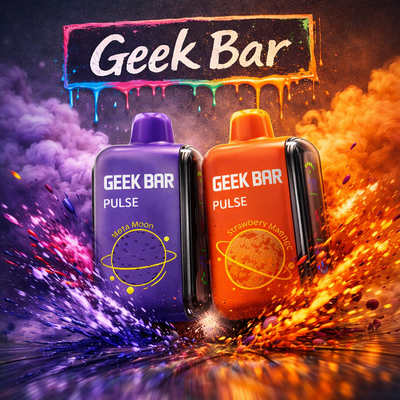
The Geek Bar Pulse X 25K brings several modern vape features together in one device. It uses a dual mesh heating system and gives you a choice between Regular and Pulse modes, along with adjustable airflow. An 820mAh rechargeable battery supplies the power, while the 3D curved smart screen keeps the remaining battery and e-liquid status visible.

2. Foger Switch Pro 30K
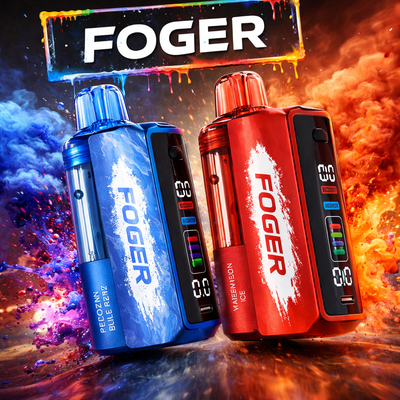
The Foger Switch Pro 30K does things a little differently with its modular design. A 200mAh prefilled pod connects magnetically to an 850mAh rechargeable power bank. The device also includes dual mesh coils, adjustable airflow, two power modes, and a transparent tank. Its smart display shows battery level and puff time, giving you more information about the device while you're using it.

3. RAZ LTX 25000
The RAZ LTX 25000 combines a dual mesh coil with an 800mAh rechargeable battery and USB-C charging. Adjustable airflow and different power modes give you more control over how it performs. There's also a Mega HD display that shows battery charge, remaining e-liquid, wattage, and the mode currently selected.

4. Geek Bar PULSE 15000
The Geek Bar PULSE 15000 uses dual mesh coils with dual cores controlling the alternating heating process. Regular and Pulse modes let you change how the device performs, while adjustable airflow adds another level of control. USB-C charging and a full-screen display showing battery and e-liquid levels round out the setup, showing just how many features can now fit inside a compact disposable.

5. Dinner Lady Galax 60K
The Dinner Lady Galax 60K combines a 24mL prefilled capacity with a 1000mAh rechargeable battery and mesh heating. It also has adjustable airflow, an animated display, and a 16-30W adjustment dial. Taken together, these features make it a good example of how today's disposables can include controls and hardware that were once more commonly associated with advanced vape devices.

When you're comparing devices, don't look only at the headline puff count. Coil setup, battery capacity, charging, airflow adjustment, power modes, e-liquid visibility, and status indicators often tell you much more about how the hardware works in everyday use.
Are Vapes Safe?
Knowing how a vape works doesn't mean the technology should be considered harmless.
The CDC states that there are no safe tobacco products, including e-cigarettes, and that adults who have never smoked or used tobacco products shouldn't start. Most e-cigarettes contain nicotine, which is addictive, and their aerosol can contain potentially harmful substances.
There are particular concerns for young people and during pregnancy as well. According to the CDC, nicotine exposure during pregnancy can harm fetal brain and lung development.
For an adult who currently smokes cigarettes, the risk comparison isn't the same as it is for a non-smoker thinking about starting. The CDC states that e-cigarettes may have potential benefit for adults who smoke when they're used as a complete substitute for smoked tobacco products. It also notes that no e-cigarette has been FDA-approved as a smoking-cessation aid.
The Bottom Line: How Does a Vape Actually Work?
Take away the screens, power modes, puff ratings, and futuristic-looking designs, and the basic mechanism is still easy to understand: electrical energy heats e-liquid and creates an aerosol that can be inhaled.
The battery provides the energy. The heating element turns that electrical energy into heat. The wick keeps e-liquid supplied to the heating element, and airflow carries the resulting aerosol to the mouthpiece. Sensors and chipsets control or automate the process, while features such as mesh coils, adjustable airflow, smart displays, and multiple power modes change how the device manages it.
That same mechanism explains a lot of everyday vape behavior, including why a dead battery stops aerosol production and why a dry wick can lead to a burnt taste. Today's devices may look much more sophisticated than early e-cigarettes, but battery power, a heating element, e-liquid, and airflow are still at the center of how they work.